9 things to know about Finnish air and its benefits

6 minute read
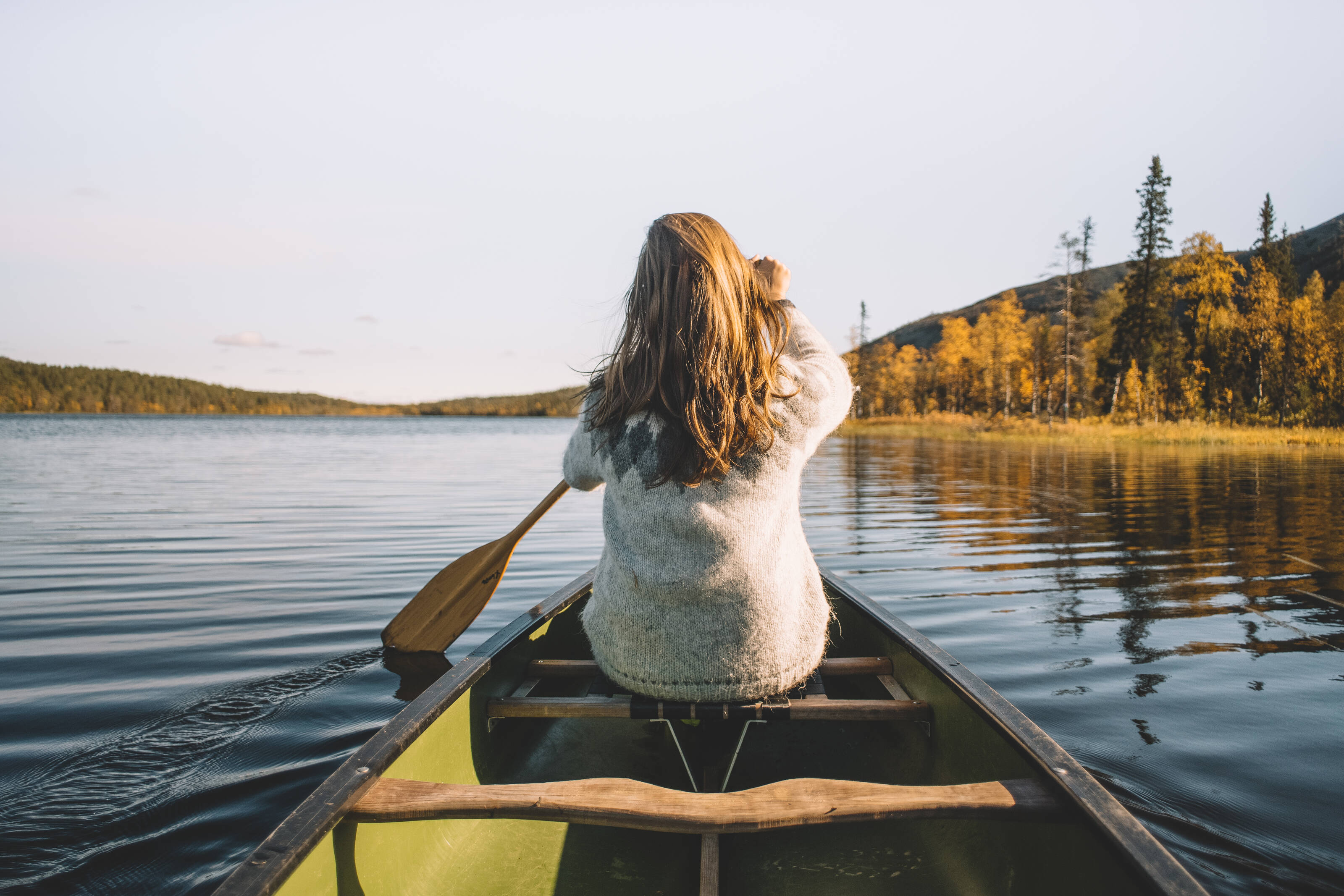
A women is paddling in a lake landscape in Finland.

Credits: Jeremy Janin

Here are nine things to know about Finnish air and its benefits

What if we told you that one of the best things in Finland is invisible, abundant and totally free?

Take a deep breath and you’ll be filled with one of the most precious things on earth: fresh air. Finland has some of the cleanest air in the world. And no, that statement wasn’t pulled from thin air – it’s a proven fact. Clean air is a major contributor to good health.

Article updated: September 2026

Credits: Jason Charles Hill

1. Finland has the some of cleanest air in the world

Air quality in Finland is some of the best in the world according to the World Air Quality Report 2025. In a global ranking of cities, Utö, Muonio and Kittilä feature among the cleanest places in the world. In addition to measurement data, IQAir uses satellite-based model data to compile the ranking.

The European Environment Agency’s (EEA) listing from 2026 ranks the city of Oulu as the European city with the cleanest air.

Credits: Marjaana Tasala

2. Finland’s vast forests play an important role

Finland has a lot of trees. Forests cover more than 75% of the land area of Finland. And what do trees do? Put simply, breathe. Now for the science bit: in the process of photosynthesis, the act of transforming sunlight into energy, trees produce excess oxygen which is then released into the atmosphere. More trees = more oxygen. There are over 40 national parks in Finland, Lemmenjoki and Urho Kekkonen national parks being the largest. Hike through this dense forest land and take lots of deep breaths.

Credits: Julia Kivelä

3. You can check air quality by looking out for beard moss

If you see beard moss (naava in Finnish) growing on old trees, take a long, deep breath: this is a sign that the air is clean. Beard moss and other types of lichen are sensitive to air pollution, especially to sulphur dioxide, so you’ll often find them in oxygen-rich areas. You’ll recognise them from their distinctive threadlike stems that dangle from tree branches like tufts of hair.

Credits: Vastavalo, Pentti Sormunen

4. Clean air means pure ingredients

Thanks to the clean air in Finland, you can eat many wild berries and herbs straight off the bush (be careful they’re not toxic, though – ask a local if you are not sure). These delicacies grow wild, nurtured by Nordic soil, clean air and fresh water. They are available for everyone to eat, from Michelin-star chefs plating seasonal dishes to kids staining their hands blue from picking bilberries. As a visitor, you’re welcome to pick and eat whatever you forage and taste the freshness for yourself, just get to know Finland's Everyman's Rights before you head out to nature. Alternatively, there are plenty of restaurants doing exciting things with the season’s finest.

Credits : Julia Kivelä
Credits: Ilona Savola

5. You can see Norway and Sweden on a clear day

Imagine yourself on top of an arctic hill in Lapland. What do you see? Well, from Salmivaara Fell in Kilpisjärvi, for example, you can see the hills and mountains of three countries in one go: Finland, Sweden and Norway. As the air is clean from smog and other types of air pollution, the visual range can be up to 50 - 70 kilometres in dry weather. This is why there are so many rewarding views to drink in after any hike in Finland.

Credits: Harri Tarvainen

6. Breathing has all sorts of health benefits – aside from the obvious

Clean and moist air is beneficial for your respiratory tract. In Finnish, we have a word for getting some fresh air: happihyppely, which literally means “oxygen hopping”. Breathing clean air has also been linked to happiness. The World Happiness Report has found that people living in countries with cleaner air report higher overall life satisfaction.

Credits: Emilia Hoisko

7. Clean air helps you to sleep better

In Finland, parents put babies and toddlers outside for their naps, even in below zero temperatures. And yes, the babies sleep better and longer – great news for parents. Studies have confirmed what babies have sussed out: people feel better after sleeping in clean air with low levels of carbon dioxide. See for yourself and sleep alfresco with an overnight stay in a tent, hut or tentsile.

Credits: Samuel Taipale

8. You can visit the spots where the air is measurably clean

The Sammaltunturi measuring station in Pallas, Lapland records some of the lowest levels of airborne pollutants anywhere on Earth, according to World Health Organization data cited by the Finnish Meteorological Institute. Among Finnish cities, Oulu has been ranked the cleanest in Europe two years running by the European Environment Agency, with five other Finnish cities – Jyväskylä, Tampere, Kuopio, Espoo and Lahti – also placing in Europe's top ten.

9. Breathe in thousands of litres per day

On average, an adult breathes 11,000 litres of air per day. Which means you would breathe in 77,000 litres if you spent a week in Finland. What could be a better souvenir than a lung-full of clean air?

Credits : Julia Kivelä
Credits: Samuli Rosenberg, Flatlight Films

See also

Finnish everyman's rights

In Finland, nature isn't just wild; it’s free for all to enjoy - respectfully, of course. Learn about what Finnish people call “The Everyman’s Rights.”