Wildlife watching in Finland: your guide to seeing bears, seals and more

4 minute read
three bears in a forest in finland.

Credits: André Alexander Baumann

Let’s go animal spotting in Finland

Finland is home to around 2,000 brown bears, a thriving population of wolves and lynxes, and one of the world's rarest seals – all living in landscapes that remain largely wild and undisturbed. For anyone who has ever wanted to observe Europe's large carnivores in their natural habitat, few destinations come close. 

Purpose-built hides in the forests of Eastern Finland let you spend the night just metres from wild brown bears. Remote wetlands in North Karelia offer your best chance anywhere on Earth of photographing a wolverine. And out on Lake Saimaa, boat trips reveal a freshwater seal found nowhere else in the world.

Article last updated: April 2026.

Credits: Visit Saimaa

Brown bear

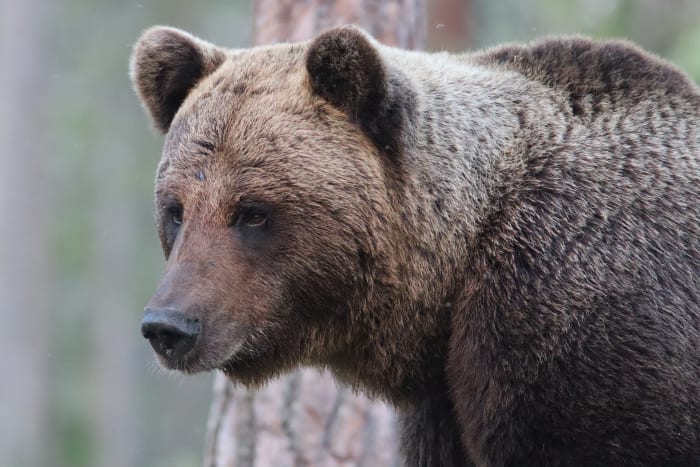
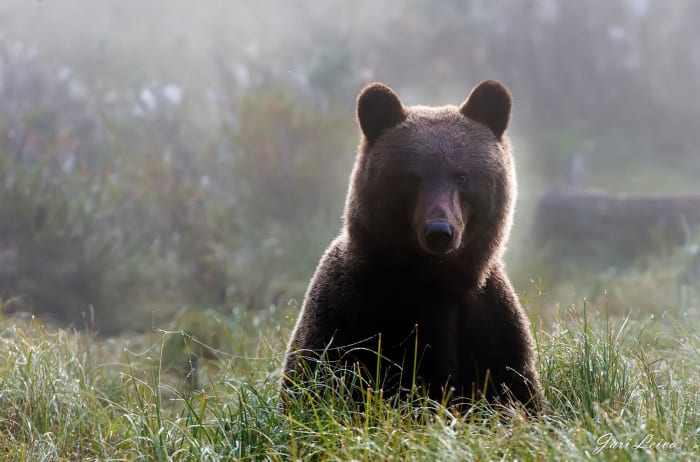
The brown bear is Finland's national animal, and ancient Finns held it in such reverence that they used dozens of different names to avoid speaking it aloud. Today, with a population of around 2,000, Finland has one of the highest bear densities in Europe. The way to see wild brown bears is to spend a night in a purpose-built hide in the forests of Eastern Finland: you settle in during the afternoon, and bears typically appear in the long light of the Finnish summer evening. 

The main hubs are Kuhmo and Suomussalmi in Kainuu, where bear-watching operators run overnight excursions. June is the prime month, with near-endless light, active bears, and a good chance of seeing cubs born that spring. Finland's wildlife operators manage feeding stations under strict regulations, and guides are careful not to disturb natural behaviour.

Credits: Niko Laurila, @niko.laurila

Saimaa ringed seal

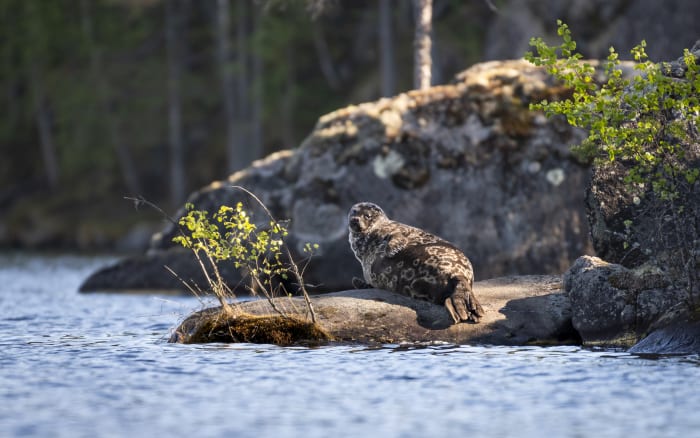
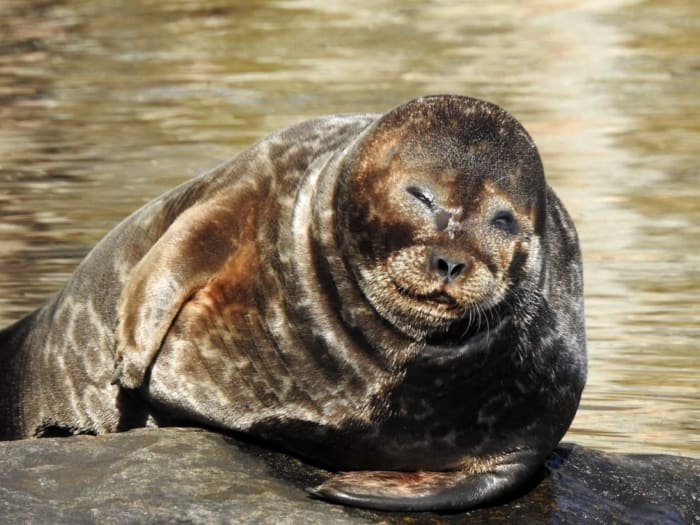
There is no other seal quite like this on Earth. The Saimaa ringed seal lives only in Lake Saimaa in Eastern Finland, isolated from the Baltic Sea when the land rose after the last Ice Age around 8,000 years ago, and in 2025 it was officially recognised as its own distinct species. The population has grown to around 530 individuals up from fewer than 200 in the late 1980s. It remains endangered, but the recovery is a conservation success story. The best way to see them is by joining a wildlife boat trip or sightseeing cruise on Lake Saimaa in late spring and summer when seals haul out to rest on rocks.

Credits: Vastavalo, Teuvo Juvonen

Reindeer

In Lapland, reindeer outnumber people, with roughly 200,000 semi-domesticated animals roaming the region. They are adapted to survive in temperatures down to -50°C and are the only mammals known to see ultraviolet light, which helps them navigate snow-covered terrain. You will frequently encounter them by the roadside in Lapland, so give them space and slow down.

Credits : Julia Kivelä

Lynx

Finland's lynxes are the forest's most secretive residents. Their acute senses of sight, smell and hearing mean they almost always detect a human presence long before the reverse is true. They are found throughout Finnish forests, and some wildlife operators have recorded lynx visits, though this is always a rare bonus rather than something to plan around.

Credits: Jari Peltomäki

Elk (moose)

Weighing up to 700 kilograms, the elk (Alces alces) is one of Finland's most impressive four-legged residents and one of the easiest large wild animals to spot. They are found virtually everywhere in Finland, most active at dawn and dusk when they move from forest cover to graze in open marshes and meadows. Drivers should always be alert, particularly in autumn.

Credits: Antero Aaltonen

Wolf

Wolves are the most challenging of Finland's large carnivores to encounter, but sightings are possible through the right operator. The largest concentrations are in Eastern Finland, close to Finland's eastern border, moving through the same forests as bears and wolverines. Overnight hides at operators such as Martinselkonen Wilds Centre (Suomussalmi) and Erä-Eero (Lieksa) occasionally produce wolf sightings, though they are always an unexpected bonus rather than a certainty. That unpredictability is part of what makes an encounter so extraordinary.

Credits: Maximilian Muench

Whooper swan

The whooper swan, laulujoutsen, is Finland's national bird, and its return from southern wintering grounds in early spring is one of the most anticipated natural events in the Finnish calendar. Flocks, sometimes hundreds strong, gather at traditional stop-off points in April and May, particularly around wetlands and shallow lake edges. In summer, whooper swans, typically in pairs, nest across the country and are easily spotted on lakeshores.

Credits: Ismo Pekkarinen

Great grey owl

Great grey owls, lapinpöllö, are the world's longest owl species and a striking presence in Finland's northern and central forests. Recognisable by the concentric rings around their eyes, they are best seen in winter, when deep snow forces small mammals close to the surface and the owls hunt in the open. If you come across a nest, give it plenty of space.

Credits: Jari Peltomäki

Wolverine

Finland is one of the very few places in the world where seeing a wild wolverine is a realistic prospect, and Lieksa in North Karelia is the place to do it. Erä-Eero Wildlife Centre has built an international reputation for wolverine encounters from lakeside and forest hides. Wolverines are the most regular visitors, seen year-round including in winter, though bears, wolves and foxes also appear.

Credits: Guido Muratore

Siberian jay

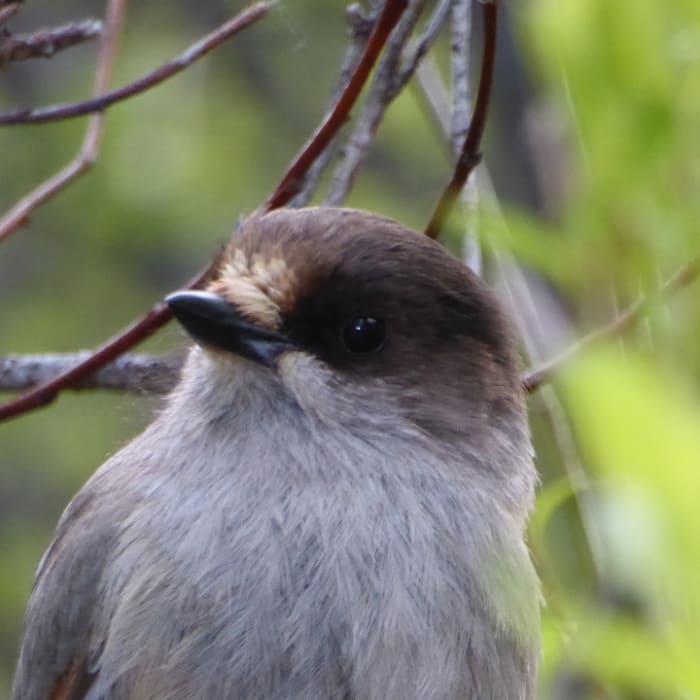
Siberian jays are found in the forests of Lapland and other northerly regions, and they have a cheerful habit of appearing just as you settle down for a break in the forest. Bold and sociable, these birds are happy to inspect whatever you are eating from very close range. A small but charming reminder that Finnish wildlife is not always elusive.

Credits: André Alexander Baumann

White-tailed eagle

White-tailed eagles were brought back from the brink of extinction in Finland through sustained conservation work, and they are now a regular sight along the Baltic coast and archipelago. With wingspans of up to 2.5 metres, these are Europe's largest eagles. Boat trips through the southwestern archipelago in spring and summer regularly produce sightings as the birds soar between islands.

Credits: Jaakko Salo

Sustainable wild-life tours in Finland

Here's a selection of Sustainable Travel Finland labelled wildlife tours around the country.

saimaa-ringed-seal-cruise-ringed-seal-lying-on-a-rock
Sustainable Travel Finland
Savonlinna
Saimaa Ringed Seal Cruise on Pihlajavesi Arghipelago
4 hours
Seal watching
Sustainable Travel Finland
Puumala
Saimaa Seal high-season safari by Eco-boat in Puumala
3 hours
Bear Watching tours
Sustainable Travel Finland
Kuhmo
Bear Watching tours
8 hours
Opas avaa reitin ja muut seuraavat perässä lumiskoottereilla. The guide opens the trail by snow-dog and others follow by snow scooters.
Sustainable Travel Finland
Puumala
Help Saimaa ringed seals during eLyly safari
2 hours
Birds of Nuuksio
Sustainable Travel Finland
Espoo
Birds of Nuuksio
3 hours
Saimaa Ringed Seal's
Sustainable Travel Finland
Puumala
Seal Watching Excursion on an Electric Eco-boat in Puumala Archipelago
3 hours

See also

National Parks in Finland

Learn more about the National Parks in Finland and...