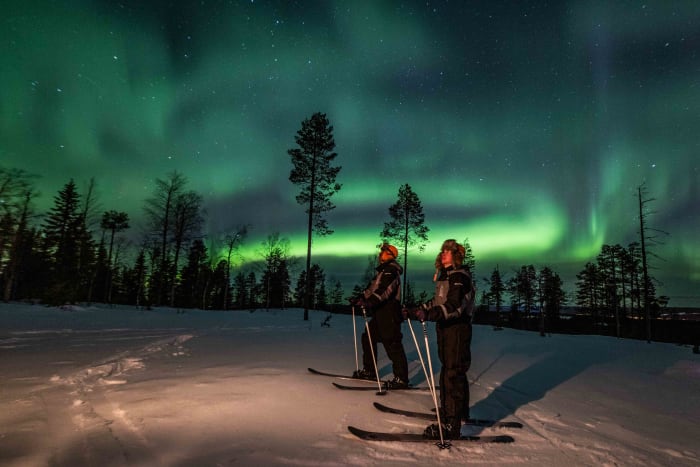
Finland's aurora season runs from late August through to early April. This is the stretch of the year when nights are dark enough for the lights to show. Within that window, autumn and spring tend to bring the most activity. Around the equinoxes, the alignment between Earth and the sun makes geomagnetic disturbances more frequent, so clear nights in September and October (autumn equinox) as well as February and March (spring equinox) are often your best bet. In autumn, before the lakes freeze over, the aurora can also reflect on the still water, creating what's known as a double or mirror aurora.
Winter remains the most popular season to visit Finland, and for good reason: the nights are longest and darkest, especially in the far north in Lapland, where the sun doesn't rise at all for weeks during the polar night (kaamos). What winter gives up in aurora activity compared to the equinox months, it makes up for in sheer hours of darkness to watch.
The lights themselves are there year-round – auroras form no matter the season – but Finland's short, bright summer nights simply aren't dark enough to see them.
For a closer look at month-by-month odds, see our article Best times to see the Northern Lights.






.jpg?s=700)